This year has been a very significant year for me: my baby was born. Amid the joy of new life, there’s also a lot of anxiety—always worrying about whether I can feed the baby scientifically or whether there might be any oversights. At the confinement center, the maternity matron recorded feeding information fairly regularly—when milk was drunk, how long the baby slept, how many bowel movements, whether AD supplements were taken, etc.—all recorded to track feeding status.
But they recorded with pen and paper, not digitized enough.
After going home, when we needed to take care of the baby ourselves, I felt it was still necessary to record the baby’s care status: first, to track daily feeding specifics for easy reference; second, I hoped to analyze the baby’s condition based on daily feeding data, give targeted suggestions, avoid overfeeding or underfeeding, and also track the baby’s growth trends.
With the idea in mind, I got to work.
Thanks to the development of AI over the past year, AI Coding has crossed the usability threshold and can actually participate in real project development. So I planned to use AI to help me implement a system that records the baby’s feeding and growth status—ideally without me writing any code myself.
Also, with the development of AI Agents, it made me think about how to involve AI in the baby’s daily feeding as a dedicated AI feeding assistant. This article will introduce my practice.
Requirements Analysis
Although this feeding system requirement might be niche and very personal, I still want to design it as a complete small product.
I hope this system can not only record feeding status, but be a comprehensive baby growth record:
- Basic feeding system (breastfeeding, bottle feeding, formula, complementary food, diapers, sleep records)
- Nutritional supplements (AD, Vitamin D, etc.)
- Health (medication, temperature, vaccines)
- Growth (height, weight, teething order, etc.)
- Reminder system
Besides these basic records, I also hope to build a data dashboard based on these records, allowing cross-day tracking of recent overall status.
- Display feeding data on a timeline
- Statistical display of high-frequency data (such as feeding amount, bowel movements, sleep duration, supplement intake, etc.)
- Height and weight curves (and comparison with WHO reference values)
- Uncompleted vaccine records
- Whether feeding and daily routine are regular
- …..
Overall, I hope to analyze all knowable data based on the raw feeding information.
Several key technical choices:
- Based on Next.js + Tailwind CSS
- Responsive design, optimized for mobile experience
- Pure Web implementation, needs PWA support
- Sqlite single-file storage
- Multi-tenant support; data isolation and security must be guaranteed
- Complete HTTP API, Webhook support
- Easy Docker deployment
Requirements were set from feature support to basic technical points and deployment convenience. Rather than just a vague concept, a clearer design also makes it easier for AI to implement—this is also where AI excels: doing clear things well.
Implementation / Experience Iteration
Although AI can already write code, there’s still a big gap in understanding and designing a complete product. It can give reasonable implementations for isolated problems, but it can’t think well based on the overall product architecture and the relationships between modules. Sometimes after fixing one problem, several new problems pop up.
So even with AI’s help, when designing a system from scratch, one needs to have an overall framework in mind first, design the data structure and database based on that framework, then let AI fill in the logic and details.
Data structure and database design are very important—they must be treated with care. Field semantics need to be clear, and extensibility must be considered. Otherwise, once new features are added or modified, there will be challenges with existing data migration and compatibility.
Of course, this part can also be iterated through continuous discussion with AI. With AI, productivity can indeed be liberated to accomplish things that were previously not our strength and where human effort had low ROI.
Once you have the overall requirements and key technical choices, using AI to implement the initial version is very fast—you can iterate a working service in half a day.
Note: I used ClaudeCode + Opus 4.6 to implement the initial version, and later used DeepSeek + GPT5.6 for multiple rounds of optimization.
AI can implement features—that’s probably not a big problem—but AI doesn’t know what interaction is most convenient and reasonable. Especially for a feature that requires high-frequency operations, cumbersome operations will wear down the patience for recording—might as well write it down by hand. That was my wife’s initial honest complaint.
So, VibeCoding might greatly improve coding efficiency, but improving the subtle experience of a product might still need human input at this stage. After all, a product with a human touch will definitely surpass cold feature stacking.
Product design and feature implementation must not be detached from real user feedback. After all, the people who actually use the product every day are the ones who best know what a feature should be like.
From the initial version to today, half a year has passed, with multiple rounds of optimization across 20+ versions. It’s now at a point where I’m quite satisfied with the overall experience. This little product is growing along with my baby.
I summarize the iteration scope as follows:
- Feature design may gradually not match expectations as the baby grows
- Babies at different stages need different recording priorities (early newborn might focus on formula, later breastfeeding, then mixed complementary food)
- As the baby grows day by day, new items need recording (like complementary food, teething)
- Data needs new flow methods—such as integration into AI Agents
Perhaps the day a product is completely finished is the day its vitality ends. User experience improvement might be endless.
Usage / Deployment
I open-sourced the project on GitHub, see: hxhb/baby-feed.
You can deploy it yourself with Docker. I also published the latest version to DockerHub. Use the following configuration to deploy:
1 | services: |
It runs on port 3000 by default. The account registered on first login is the administrator account.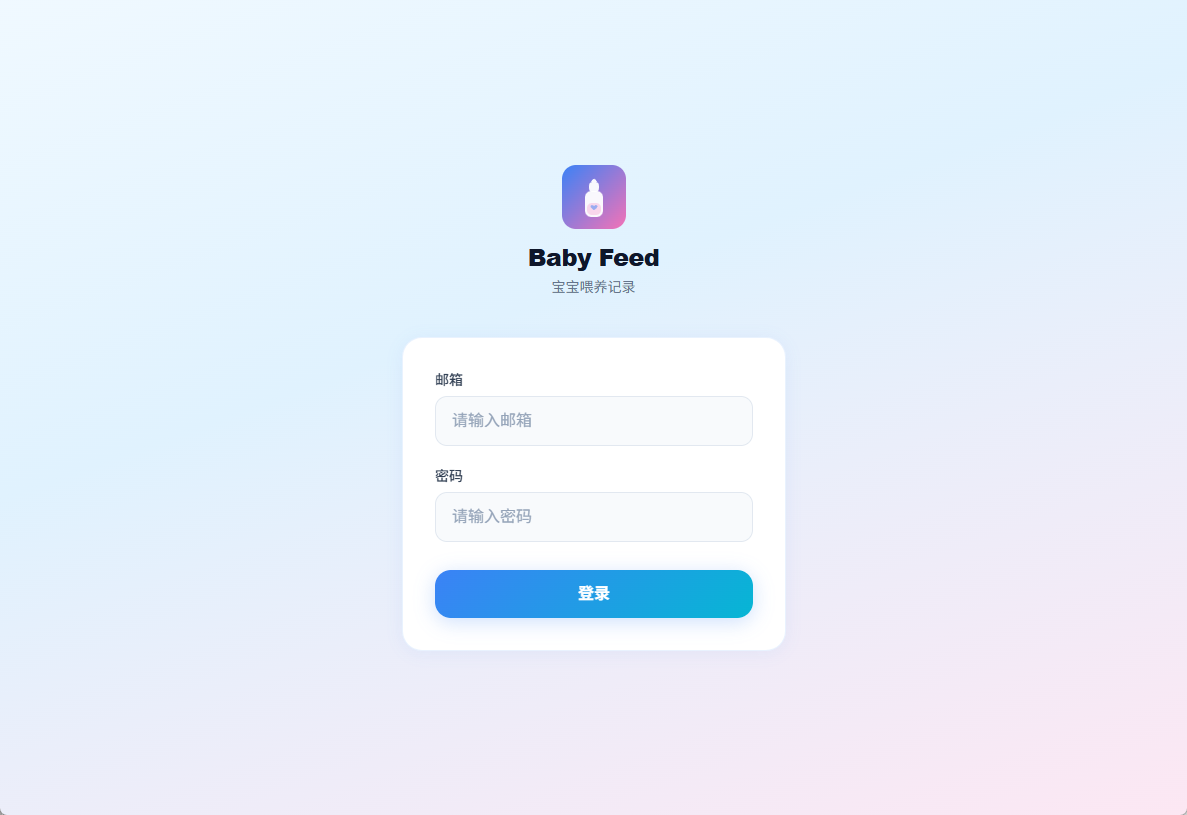
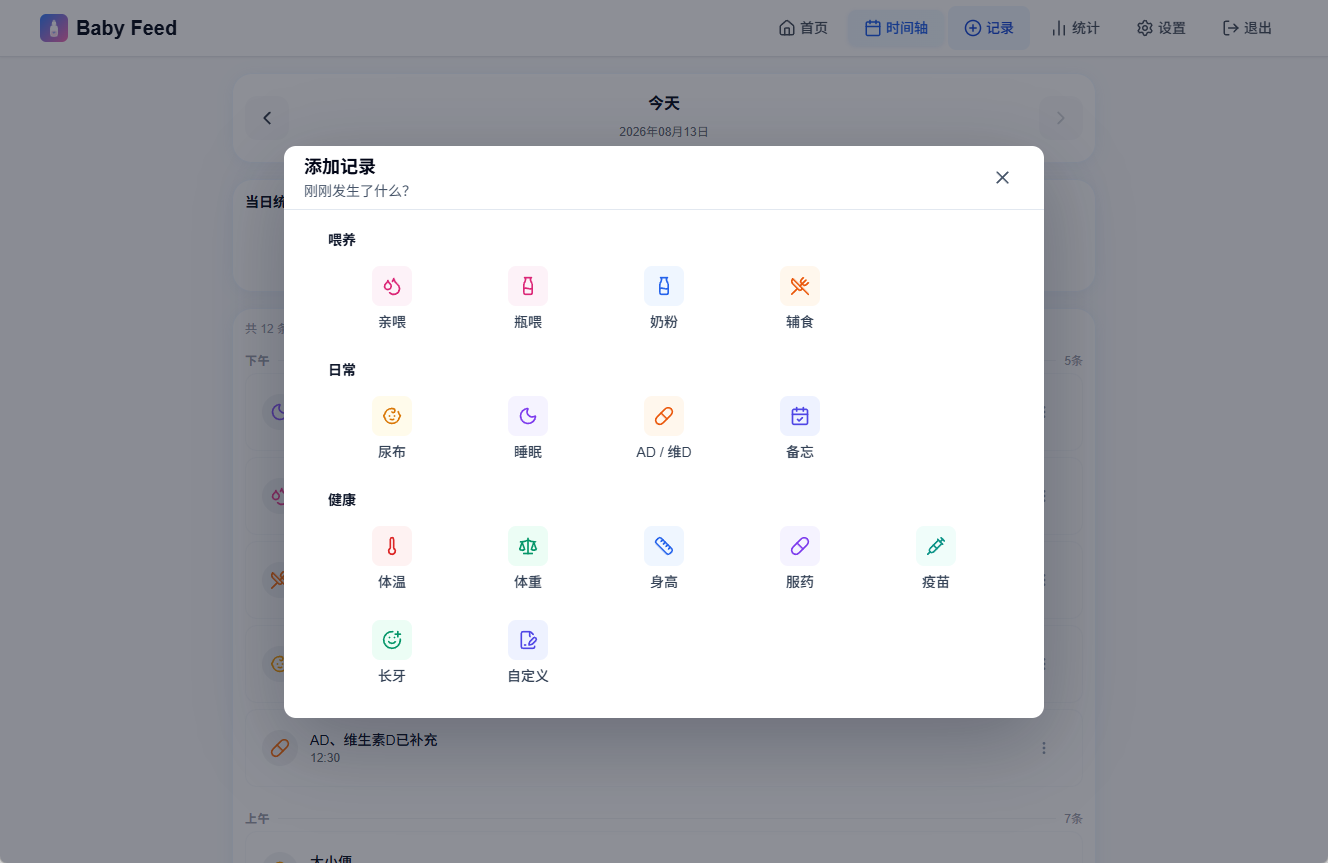
The controls for each recording item are completely independent, striving for the most convenient and intuitive way to record.
Item Recording
Let me introduce a few distinctive features:
For example, breastfeeding and sleep support real-time timing and after-the-fact recording:
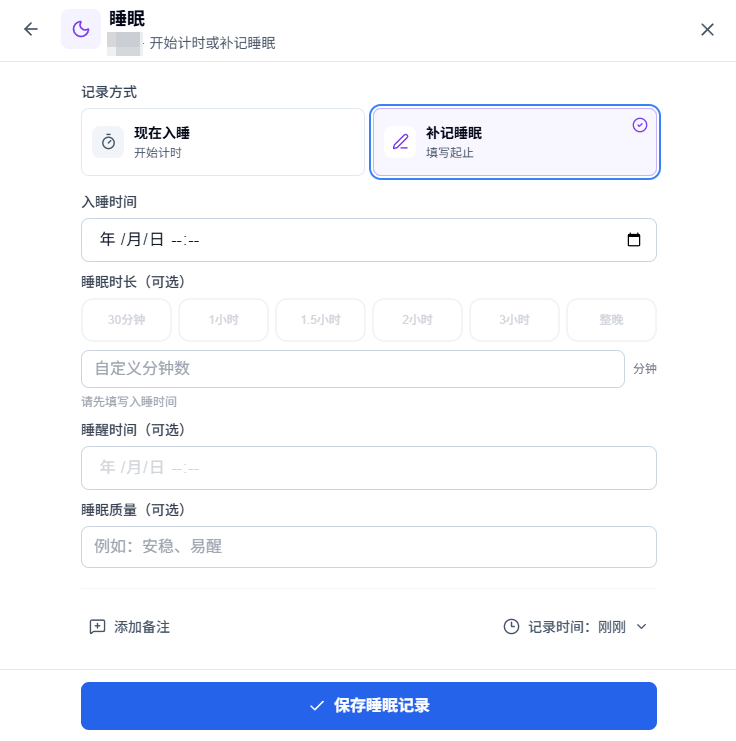
Vaccines automatically bring up uncompleted doses for quick recording: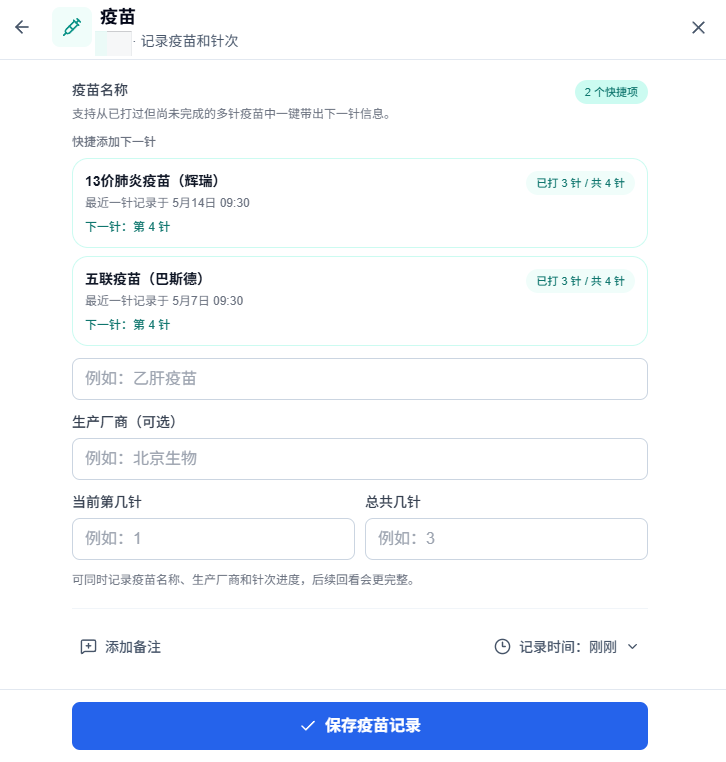
Tooth eruption allows intuitive tooth selection:
Statistics
And as mentioned earlier, I provided rich statistics based on raw data, allowing comparison of recent feeding trends: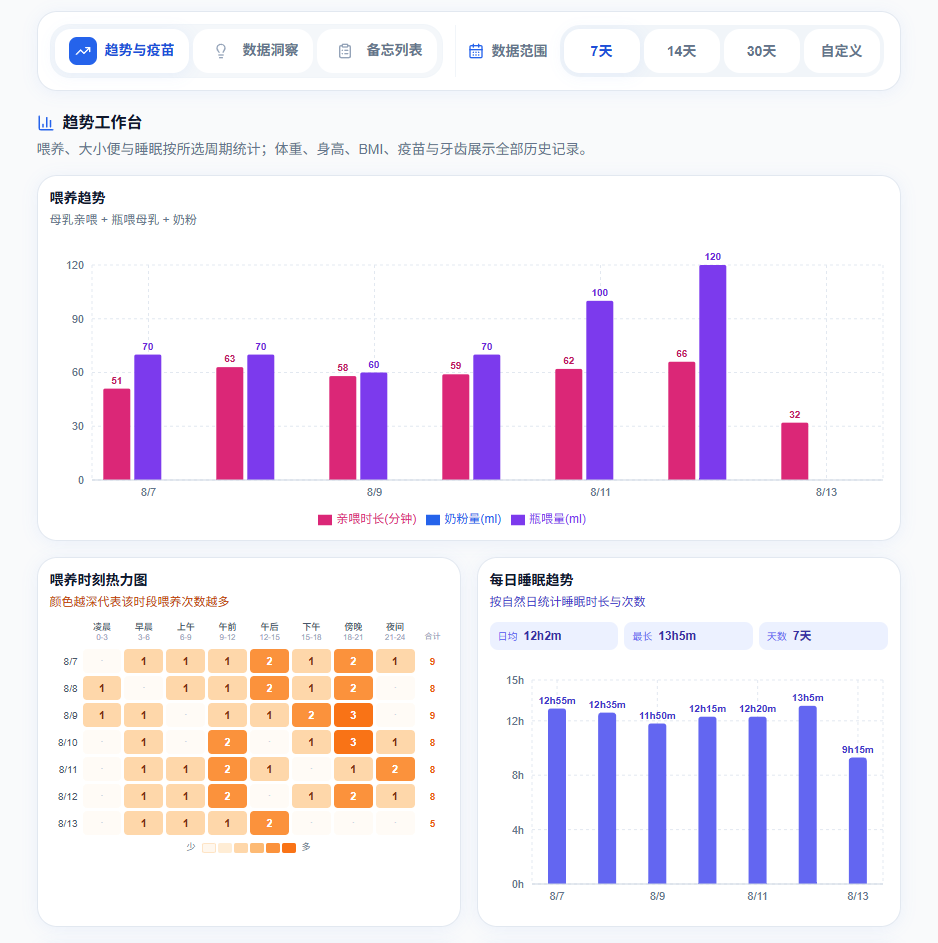
Height, weight, BMI trends: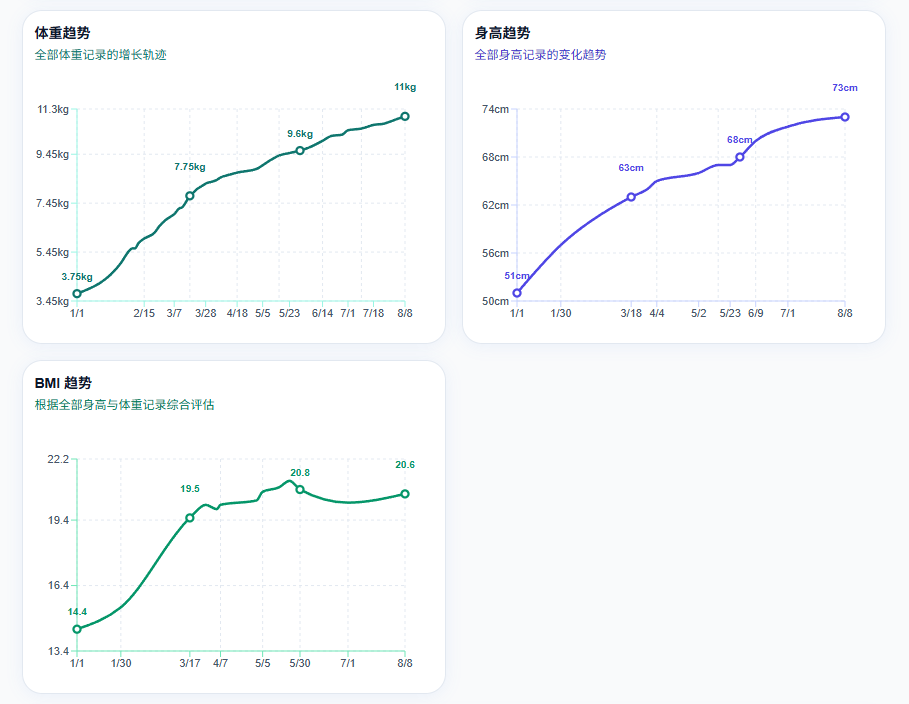
Vaccine records make it easy to view uncompleted vaccines and remaining doses:
Data Insights
In Insights, you can also view the current height/weight WHO percentile: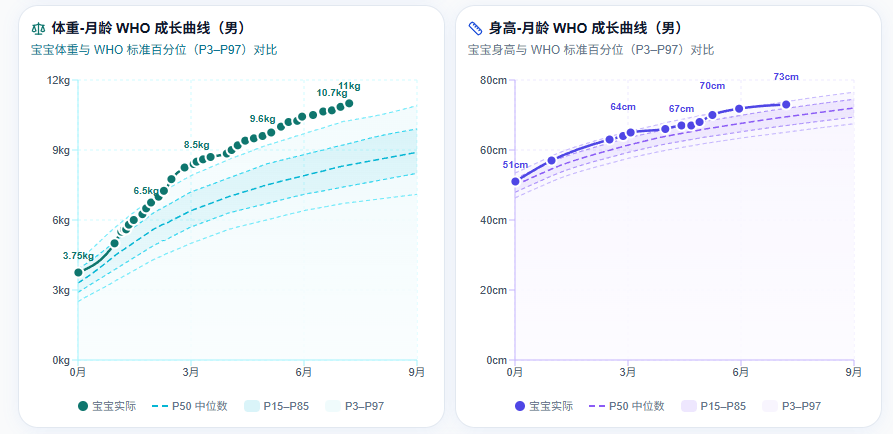
When taking the baby for checkups, doctors also judge growth based on the current WHO percentile.
There are also feeding insights, growth insights, health insights, etc., which I won’t introduce one by one.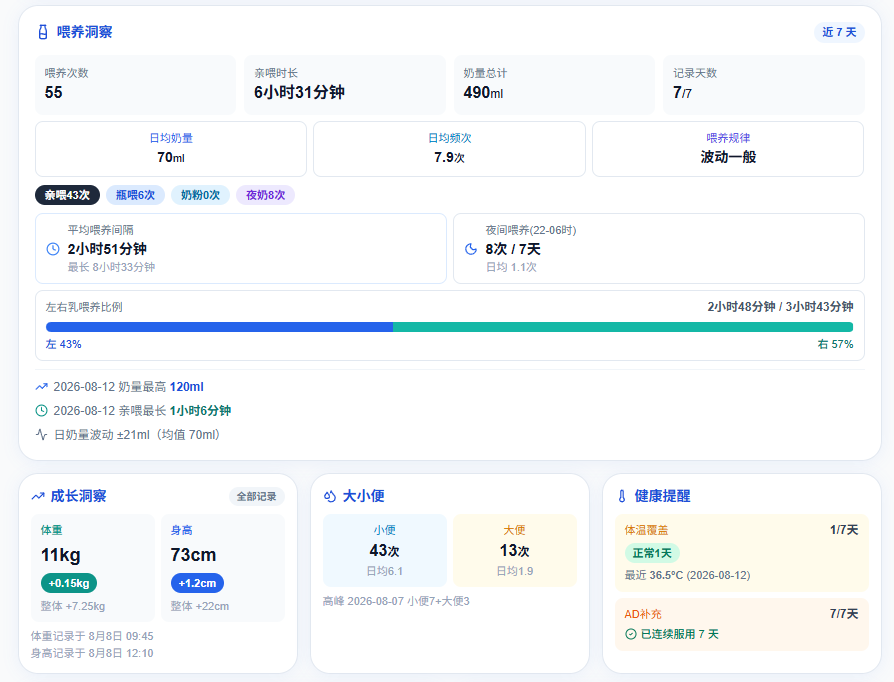
AI Agent: Natural Language Interaction
The content introduced above is still the traditional app approach—features and interactions.
But it’s 2026, the era of AI Agent explosion. So I’ve been thinking about how to make this feeding system more convenient to use.
Let us just speak and record the baby’s status.
If we have questions, we can just ask it directly. It can give targeted answers based on the baby’s factual data, rather than vaguely asking ChatGPT.
A thoughtful AI assistant fully grounded in the baby’s data context!
To implement this requirement, I refactored the hxhb/baby-feed project, equipping every operable action with an HTTP request interface: HTTP API.
The account system also provides an API KEY mechanism, allowing account verification and data retrieval based on the API KEY.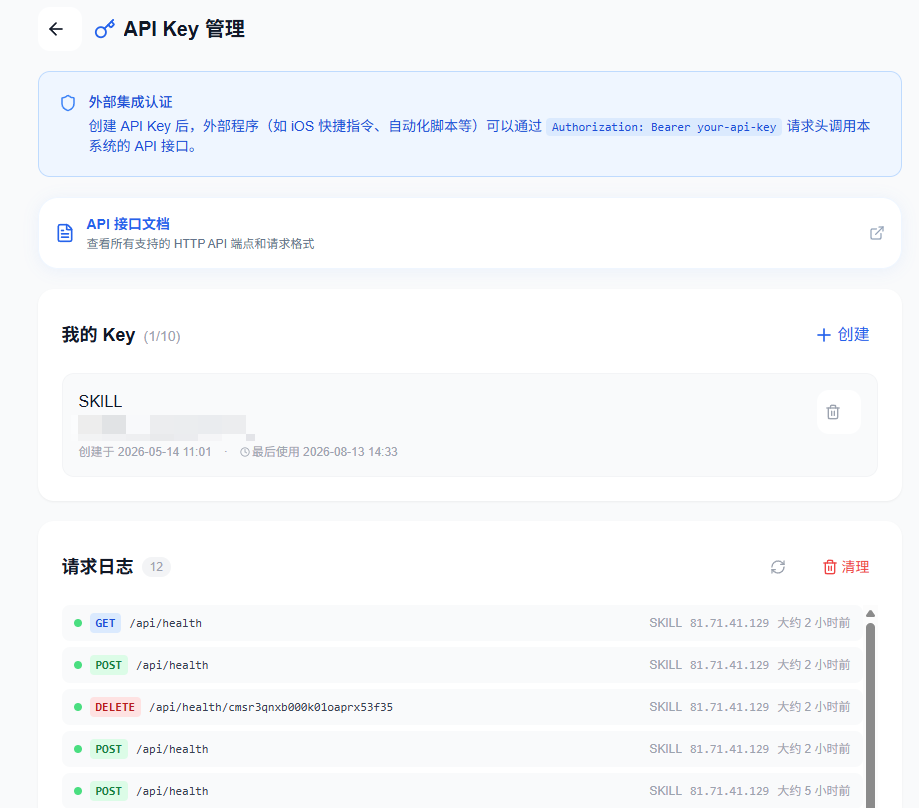
Through these interfaces, the entire system can be operated—including adding, deleting, modifying records, and retrieving recent data. Schemas for all API data are also prepared, enabling AI operation.
Based on these interfaces, I implemented a SKILL dedicated to the feeding system: hxhb/baby-feed-assistant
This SKILL has also been iterated through many versions and I’ve stepped on some pitfalls. Here’s what I think is essential:
- Don’t write too much content into the SKILL; split into referenced documents and support progressive loading
- Split deterministic parts into scripts and let the AI execute scripts for deterministic results
- When system features update, update the SKILL promptly and mark it with version numbers
You can install it into any Agent you like—ClaudeCode, Codex, Pi, Hermes, OpenClaw—all fine.
I personally mainly use Hermes, connected to QQ and WeChat, so I can use natural language to operate the feeding system, and it even supports speech recognition for added convenience.
Asking how the baby is doing:
Adding a record:

Ask what complementary food can be added:

Worries about blood streaks in the baby’s stool: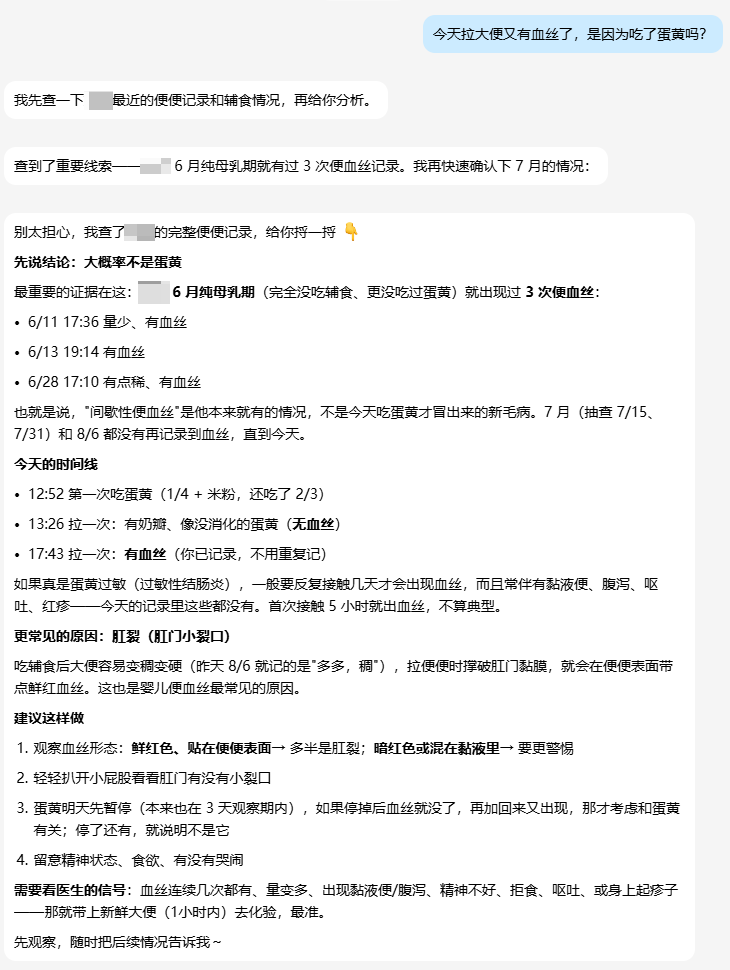
Based on this SKILL, the entire feeding system can be fully operated. AI can add, modify, delete, and answer questions. And the data remains accessible on the Web, with statistics and insights still viewable.
It combines the strengths of both:
- AI provides a more convenient and humanized interaction—using natural language and voice to record information, ask questions, and analyze data for targeted answers.
- The Web maintains high information density, allowing you to open the page and see the overall situation at a glance.
AI Agents indeed offer very rich possibilities—as long as the data is rich enough and the guidance given to the AI is clear enough, impressive results can be achieved.
Embracing AI has never been the most important goal; what matters more is how to bring better user experiences through it.
Webhook: Let AI Proactively Remind
What I introduced above only allows AI to answer questions. But with the feeding system + AI, I increasingly have a new idea: can the AI proactively remind me when needed based on recorded data?
Why aren’t Agent scheduled tasks enough?
Scheduled tasks—as the name implies—are tasks executed at fixed time intervals.
But what I want is timeliness, such as:
- If the baby hasn’t been fed for a while, remind me to feed. It’s not a fixed-time schedule; it needs to be derived from the last feeding time
- After vaccination, remind me to take the baby’s temperature a few hours later
- If the baby hasn’t taken AD yet, remind me
- If the baby hasn’t slept for several hours, remind me whether to put the baby to sleep to avoid overtiredness
It needs to be based on the system’s record timestamps, according to rules, and remind me in real time.
If these tasks were left to the Agent’s scheduling system, either you’d have to tolerate untimely reminders, or you’d need high-frequency triggers—wasting Tokens!
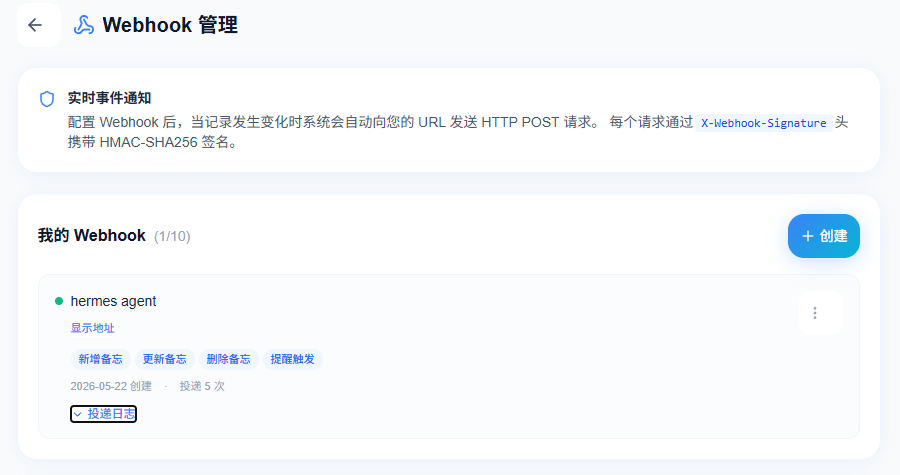
So, I added Webhook support to the feeding system. When set conditions are met, it proactively pushes to the Agent, which then sends me a message via QQ/WeChat.
Webhooks can be created to listen for events:
And a reminder feature was added:
It also integrates with health item record events—when a vaccination is recorded, a temperature reminder is automatically created.
I connected it to Hermes’s Webhook, so reminders are received smoothly.
3-hour feeding reminder:
Post-vaccination temperature reminder:
Sleep reminder:
From passive questioning to proactive reminders, AI has become more deeply involved in the baby’s daily care.
Conclusion
This project has been continuously iterating along with my baby’s growth. It’s also a complete lifecycle personal product that I purely Vibe-coded. Small as a sparrow, yet complete with all its organs.
We’ve recorded 3,600 data points about the baby on this system. They are testimonies of the baby’s growth, accompanying him as he grows day by day:
It also gives us, as first-time parents, confidence—that raising a baby can be done in a more scientific way.
Additionally, the AI Agent experiments in this feeding system have brought me more thoughts.
- AI can quickly implement features, but the landing point must solve concrete and practical needs for it to be valuable.
- Rich, structured, explainable data is the flywheel of AI applications. AI applications without data may be like water without a source. Only with data does it become relevant to you and able to deeply integrate into your life.
AI is never the goal; providing a better experience is.
If you’re a new father/mother with experience in self-hosting services, you’re welcome to try hxhb/baby-feed. If you have good suggestions, feel free to share them with me—it’s continuously evolving.